Back
Back
Head in the clouds: why sky and cloud wallpapers still feel so right at home
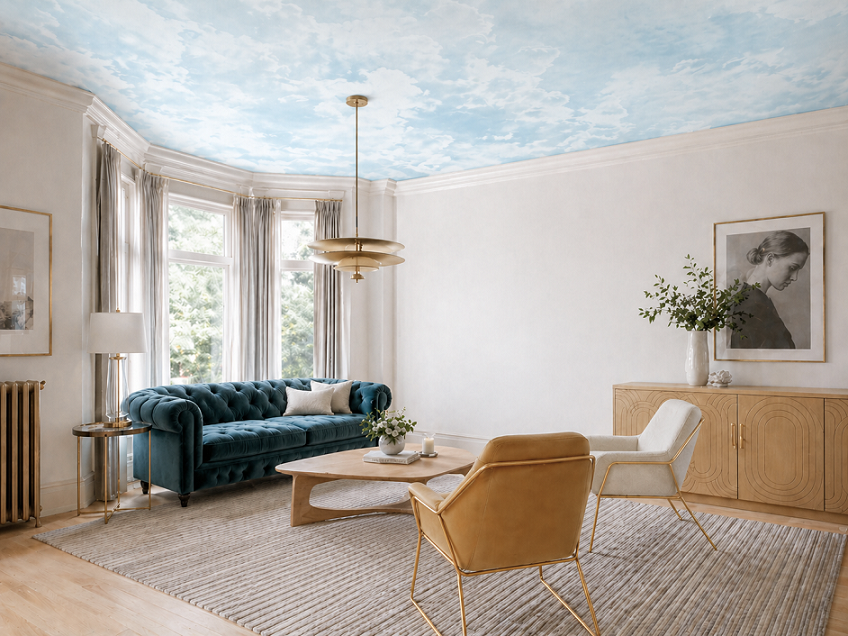
There are few decorating ideas that change the mood of a room as gently as a sky on the wall. Clouds have a way of opening a space without making it feel cold. They bring softness, movement and a little daydreaming energy into a room, which is perhaps why they have never truly disappeared from interiors.
Wallpaper itself has a long and surprisingly democratic history. The Victoria and Albert Museum traces its earliest use to the 16th century, when it appeared in smaller domestic spaces rather than grand aristocratic rooms. By the 20th century, it had spread everywhere from hallways to bedrooms. That history matters, because cloud and sky wallpapers sit in a very old decorative tradition: the desire to bring landscape and a sense of elsewhere indoors.
To go for a repeat pattern or wall mural?
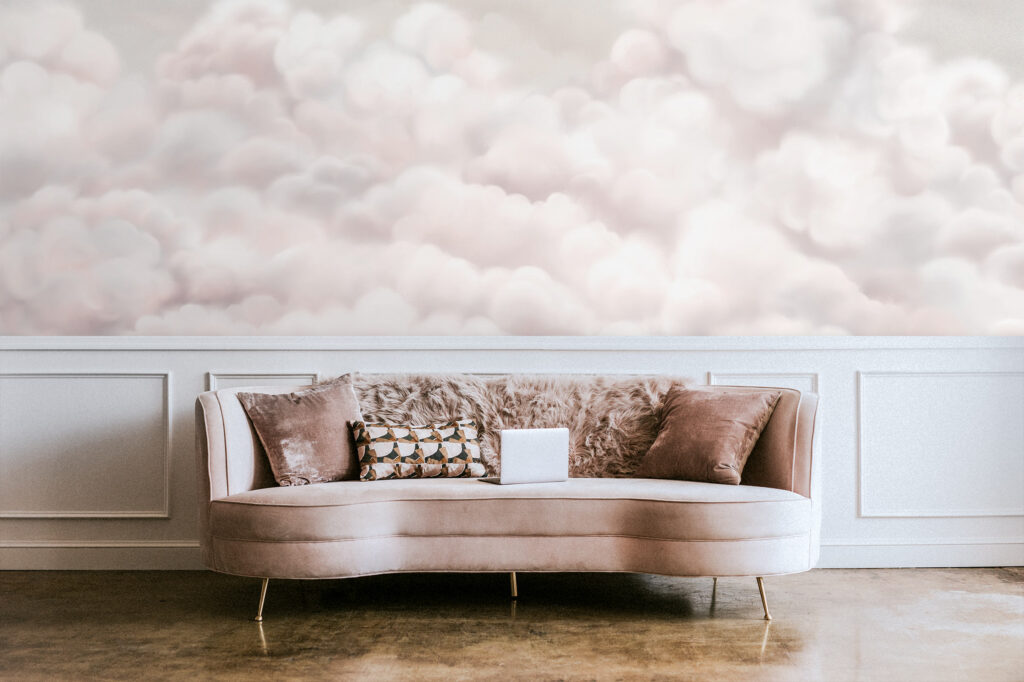
The first thing to understand is that cloud wallpapers tend to fall into two camps. There is the mural: one large composition, often with a painterly sky, rolling cloud forms or a horizon line. Then there is the repeat: a pattern that continues across the wall in a steady rhythm. Murals feel atmospheric and immersive. Repeats feel lighter, more decorative and often easier to live with over time. Neither is better. The choice depends on how much presence you want the wall to have.
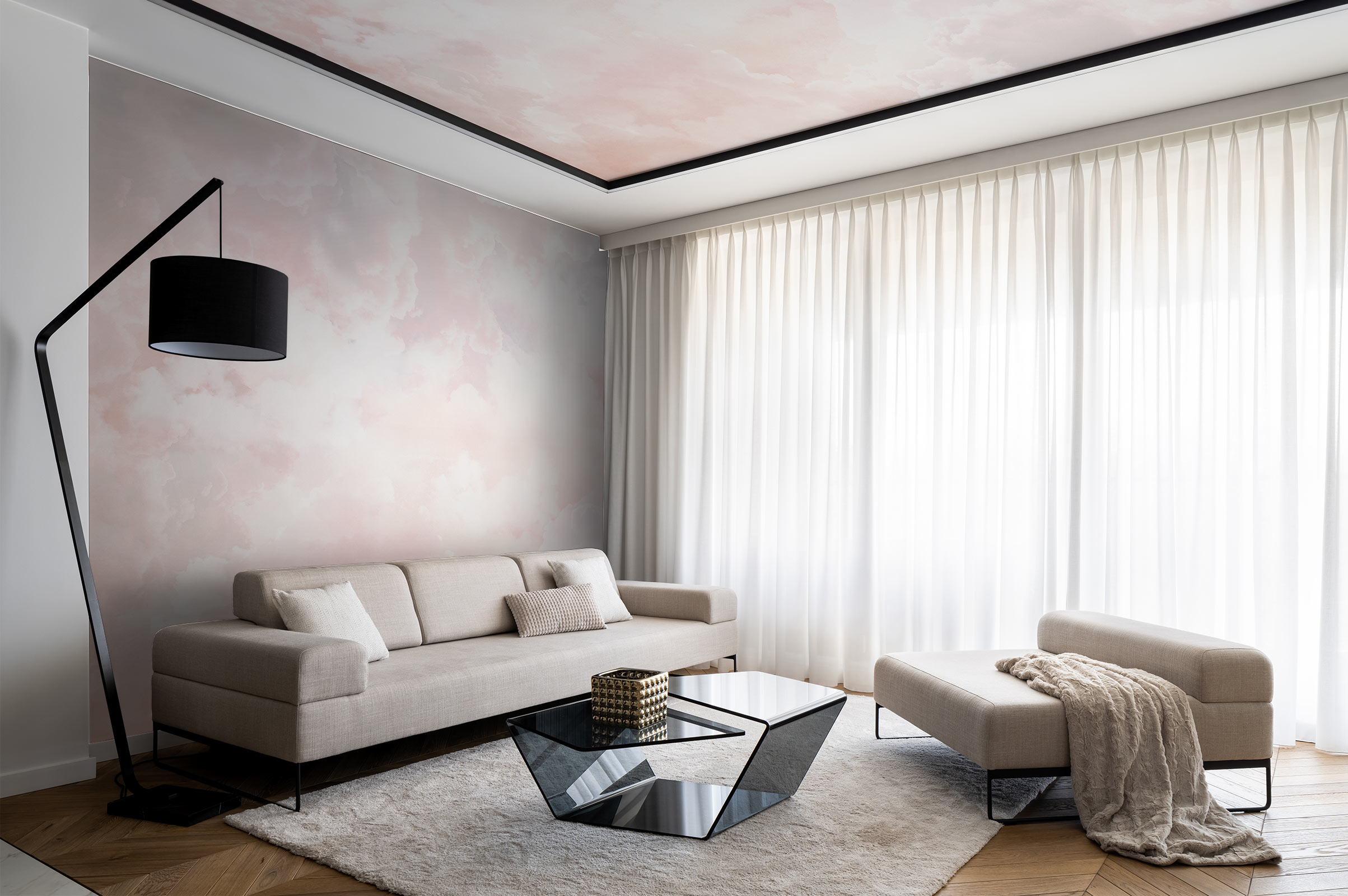
Colour matters just as much. Blue skies are charming, though they are not the only option. The most elegant cloud wallpapers today are often the least literal: pink, parchment, smoke, putty, misty grey. These tones give you the romance of sky without locking the room into a nursery-ish or theme-led mood. If your furnishings already carry plenty of colour, keep the wallpaper quiet. If the room is mostly neutral, a stormier cloud design can become the focal point.
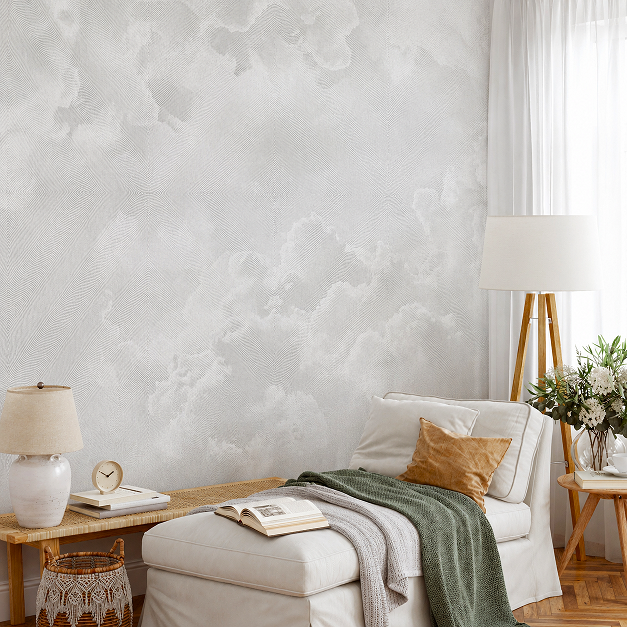
There is also a practical point worth remembering. Clouds are forgiving. Because the motif is organic, they tend to hide the visual fuss that more geometric patterns can create. Seams are often less conspicuous in a cloudy design than in a rigid stripe or trellis. They are also good at softening awkward architecture. A sloped ceiling, an alcove, a chimney breast or a narrow landing can all benefit from a pattern that looks as though it drifts rather than stops and starts.
And yes, the ceiling is an excellent place for wallpaper!
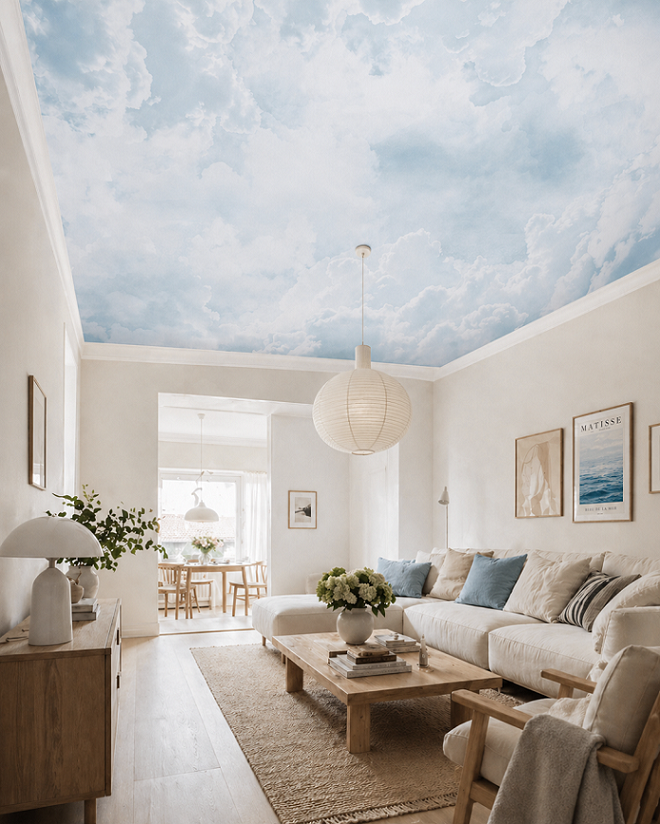
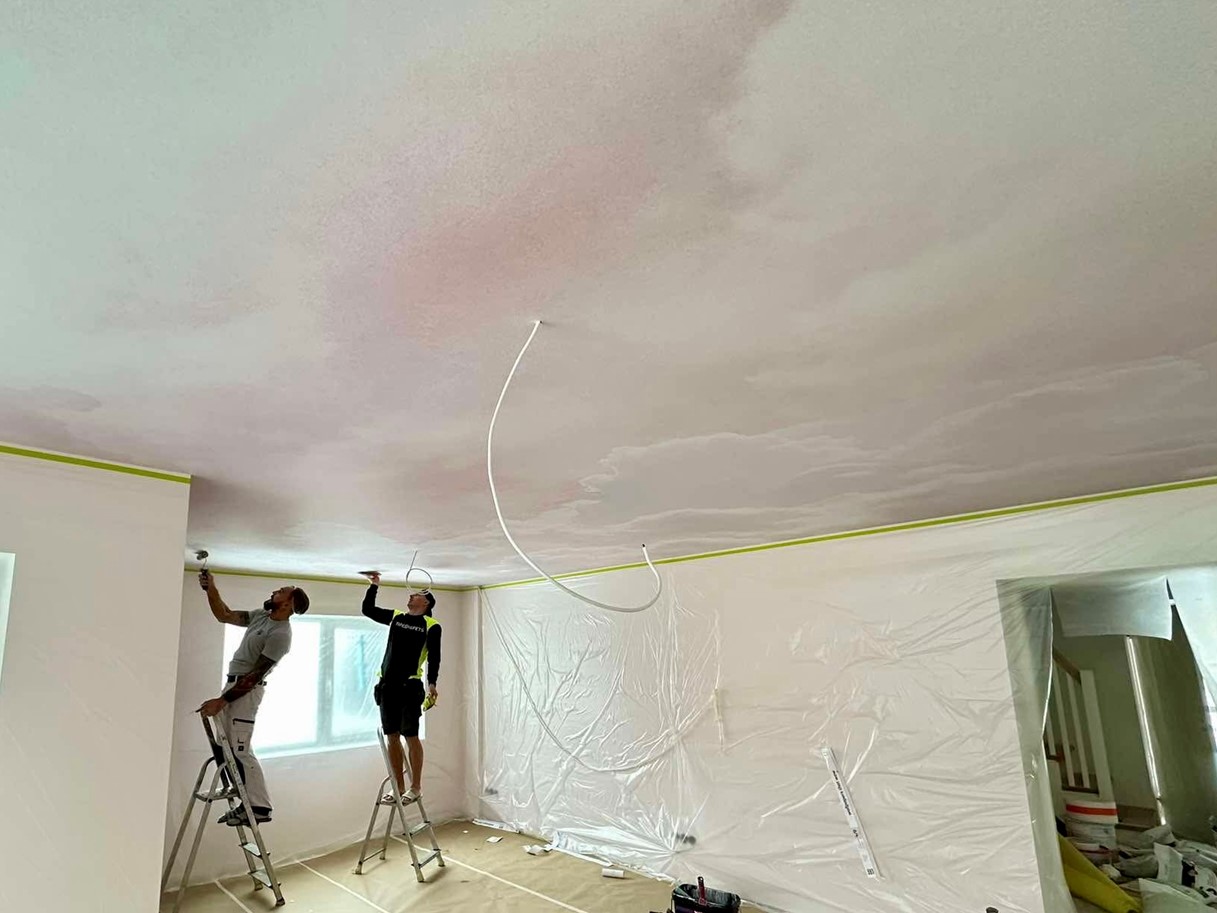
If walls covered in cloud feel like too much commitment, papering the ceiling can be the more enchanting move. It draws the eye upward, makes bedtime spaces feel cocooning rather than flat, and lends powder rooms and dressing rooms real personality. For a ceiling treatment, I would keep a few rules in mind. Choose a design with movement rather than heavy contrast. Let the walls be quieter, whether painted or papered in a restrained companion tone. In lower rooms, pale grounds are your friend. In a bedroom, a clouded ceiling above crisp white bedding can feel wonderfully serene. In a dining room or entrance hall, a slightly moodier sky can create a more enveloping effect, especially with good lamplight in the evening.

So if you have been hovering over a sample and wondering whether a cloudy wall is too fanciful, take heart. In the right room, it is quietly practical. It softens hard lines, adds depth, disguises awkwardness and sets a tone that paint alone rarely manages. On a wall, it can bring a room to life. On a ceiling, it can turn the everyday act of looking up into a pleasure.
And that, really, is what the best wallpaper has always done: give a room a mood, then let you live beautifully inside it.